
Web design and development for Canada
A website that works commercially in one country can fail in another for reasons that have nothing to do with design. In Canada, PIPEDA applies federally, Québec's Law 25 imposes stricter consent and breach rules, and AODA makes accessibility a legal requirement in Ontario. Payments are a separate problem again: Stripe, Moneris and Interac e-Transfer, which Canadian customers expect for anything other than card payment. Neither is visible in a template bought off a marketplace, and both are discovered late and expensively.

The handover
Finished files
Production-ready output in the format your printer, platform or workshop actually needs — press PDF, editable source, CAD file, font binary or deck, as the work requires.
Editable sources
The working files, not just the export, so your team can change the work later without coming back to us.
Full rights
Copyright transfers to you on final payment. Nothing we make for you is resold or reused elsewhere.
Two revision rounds
Included in the quoted price. Corrections are logged against the draft rather than argued over on a call.
Five steps, and you approve the first three
01 · Brief
You tell us what the finished thing has to do, and send whatever material you already have.
02 · Scope & price
A written scope, a fixed figure and a delivery date, usually within one working day.
03 · Structure
You sign off the architecture before production starts, so nothing large is built on a wrong assumption.
04 · Production
Work arrives in stages as it finishes, not all at the end, with two revision rounds included.
05 · Handover
Files, sources and rights in your hands, and the invoice closed.
Often commissioned together
- Textbook writing services
- Curriculum & syllabus development
- Coaching institute material
- Workbook & practice set development
- Teacher guides & solution manuals
- Ghostwriting services
- Book production & publishing
- Editing & proofreading
- Translation services
- Subtitling & captions
- Investor pitch deck design
- Company profile writing & design
Building for Canada — how we work
We start with what the site has to do commercially, then with what it has to do legally in Canada. Those two conversations happen before any design, because both change the structure rather than the surface.
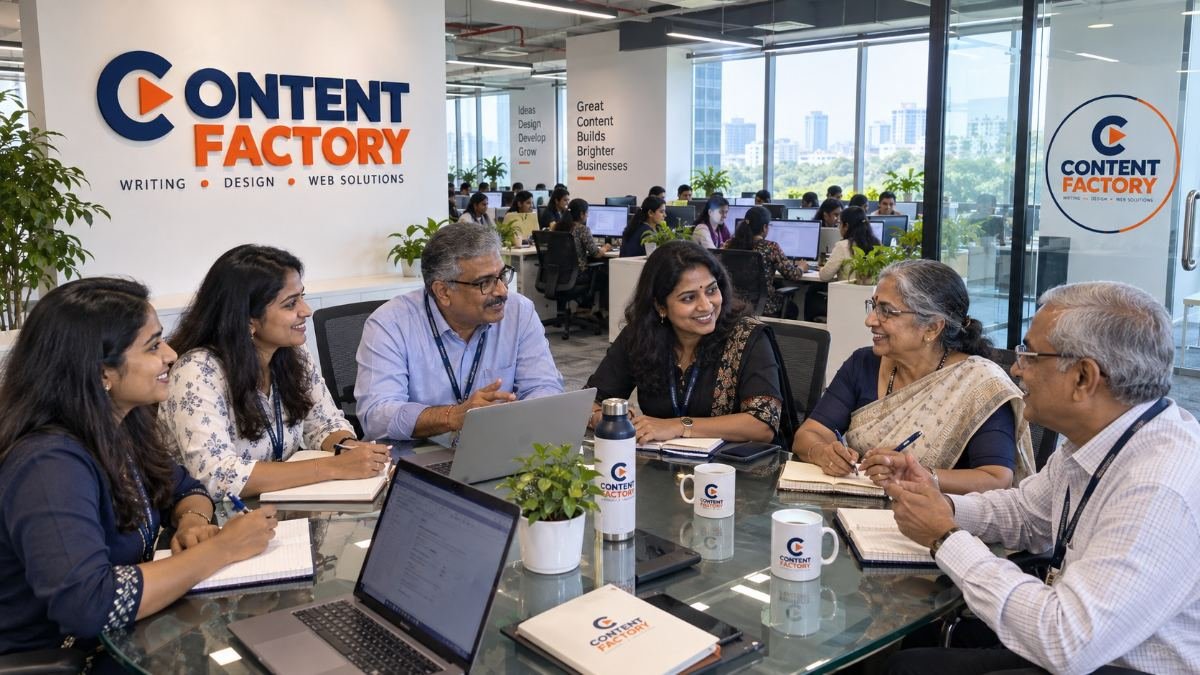
Because writers, designers and developers sit in the same studio in Chennai, the copy and the design are produced together. Most website projects fail on content arriving late and being poured into a layout that was not built for it; here the two are written at the same time.
Fixed price agreed in writing, quoted in CAD or US dollars. Two revision rounds at design stage, source files and documentation on handover, and no ongoing lock-in for routine changes.
Built for the law, the payments and the language of this market
The law that applies here
In Canada, PIPEDA applies federally, Québec's Law 25 imposes stricter consent and breach rules, and AODA makes accessibility a legal requirement in Ontario. We build to it from the start rather than retrofitting a cookie banner afterwards.
Payments the market uses
Here that means Stripe, Moneris and Interac e-Transfer, which Canadian customers expect for anything other than card payment. Checkout is designed around the methods people actually reach for, not around whatever the platform ships with.
Language handled properly
The site is built for English and French, and in Québec Bill 96 requires French to be at least as prominent as any other language. Where a second language is needed it is a full parallel version, not a machine-translated layer over an English layout.
Domain and hosting
In this market, .ca requires a Canadian presence, and public sector work often requires data to remain in Canada. We tell you what you will need before the build begins rather than at launch.
The practical trap
The thing that catches most projects here: Québec's language law is the trap: a French translation buried behind a language switch does not satisfy it, and penalties are enforced.
Yours to run afterwards
The site is handed over with the source files, the content management access and written documentation. You are not locked into us for ordinary changes.
Everything is built by the same studio that writes the content, so the copy, the structure and the design are produced together rather than assembled from three suppliers.
What a Canada build includes
- A responsive site designed mobile first and tested on real devices
- Compliance built in: consent, privacy text and accessibility to WCAG 2.1 AA
- Checkout configured for Stripe, Moneris and Interac e-Transfer, which Canadian customers expect for anything other than card payment
- Full language handling for English and French
- Domain, hosting and deployment guidance for Canada
- Source files, CMS access and written documentation on handover
Typical build is four to ten weeks depending on scope. Fixed price agreed in writing before work begins, quoted in CAD or US dollars.
Frequently asked
What law applies to a website in Canada?
In Canada, PIPEDA applies federally, Québec's Law 25 imposes stricter consent and breach rules, and AODA makes accessibility a legal requirement in Ontario We build to it rather than adding a banner afterwards.
Which payment methods should my checkout support?
In this market, Stripe, Moneris and Interac e-Transfer, which Canadian customers expect for anything other than card payment A checkout missing the dominant local method underperforms badly whatever else it does well.
Do I need the site in more than one language?
Here the expectation is English and French, and in Québec Bill 96 requires French to be at least as prominent as any other language Where a second language is required we build it as a full parallel version rather than a translation layer.
What about domain and hosting?
In Canada, .ca requires a Canadian presence, and public sector work often requires data to remain in Canada We confirm what you will need before starting, not at launch.
What is the single biggest mistake made here?
Typically this: Québec's language law is the trap: a French translation buried behind a language switch does not satisfy it, and penalties are enforced.
Before you commission
How much does thesis to book conversion cost?
Prices are fixed in writing before work begins. Scope, language count and turnaround move the figure; volume across a programme brings it down. Send the brief and you have a number within a working day.
How long does it take?
Most single deliverables run three to fourteen weeks depending on length and complexity. Programmes are staged so early parts reach you while later parts are still in production. You get a date with the quote.
Who does the work?
A specialist from our thesis to book team, with an editor and a production person on the same project. Everyone is bound by the same confidentiality terms.
Do I own the result?
Yes. Full copyright transfer, editable sources and production-ready files on final payment. Nothing is resold or reused.
Can it be produced in other languages?
Yes — any of a hundred-plus languages, typeset in the same studio so layout and page numbers match across editions.
Do you work with clients outside India?
Yes. Publishers, institutions and founders in the United States, United Kingdom, United Arab Emirates, Canada, Australia and Japan. Work is delivered by email and shared drive and quoted in US dollars.







Tell us what you need made
Send the brief and we reply with a scope, a fixed price and a date — usually within one working day. Whole programmes are quoted the same way as single titles.
info@contentfactory.in · contentfactory14@gmail.com · Chennai, Tamil Nadu, India
Section pages
- All services A–Z
- Design services
- Engineering drawing
- Web & app design
- Font development
- Research & expert books
- Film writing
- Film & OTT writing
- Political strategy
- Business strategy
- Speech writing
- Lyrics writing
- Copywriting & content
- News & article writing
- Biography & life-story books
- OCR & digitisation
- YouTube transcription
- Transcription & proofreading
- Music creation
Service pages
- Textbook writing
- Curriculum development
- Coaching material
- Workbook development
- Teacher guides
- Ghostwriting
- Book publishing
- Editing & proofreading
- Translation
- Subtitling
- Pitch decks
- Company profiles
- Business plans
- Annual reports
- Drawing sets
- CAD drafting
- 3D CAD modelling
- BIM modelling
- Website design
- Mobile app design
- UI/UX design
- Logo & brand identity
- Custom fonts
- Screenplay writing
- Research monographs
- Thesis to book
- Resume & CV
- SEO content
- Technical writing
- Grant proposals
- White papers
- Case studies
- Training material
- Biography writing
- Children’s books
- Novels & fiction
- Transcription
- Legal translation
- Localisation
- Voice-over & dubbing
- eBook & Kindle
- Book covers
- Brochures & catalogues
- Packaging
- Interior drawings
- Market research
- Resume writing by profession
- Textbook writing by city
- Resume & CV by city
- LinkedIn profiles by city
- Company profiles by city
- Career documents by city
- Translation language pairs
- Textbook writing by board
- Textbook writing by subject
- Textbook writing in Dubai
- Book writing in Dubai
- Pitch decks in Dubai
- Textbook writing in the USA
- Book ghostwriting in the USA
- Pitch decks for US investors
The studio
Journal feed: rss.xml